
Cache County Divorce Records and Decrees
Cache County divorce decree records are maintained by the First District Court at 135 N 100 W, Logan, Utah. Cache County sits in northern Utah and is home to Utah State University. The county was created on January 2, 1857, and its name comes from the caches of furs left by mountain men in the area. Divorce cases for all Cache County residents are filed at the First District Court in Logan. This guide explains how to find a divorce decree, what the records contain, and how to request copies from the court or state vital records office.
Cache County Quick Facts
Cache County First District Court
The First District Court in Logan is the official custodian of all Cache County divorce decree records. The court keeps every divorce decree as a permanent legal document. Clerks can search by party name or case number. Certified copies are available at the counter or by mail. A public access terminal is on site for browsing case information.
The First District Court serves Cache County, along with Box Elder, Rich, and Weber counties, as part of Utah's First Judicial District. When a Cache County judge signs a divorce decree, that order becomes permanent. Under Utah Code § 30-3-4, the decree must state the court's findings and orders clearly. The court files the original decree and preserves it indefinitely.
| Court | First District Court, Cache County 135 N 100 W Logan, UT 84321 |
|---|---|
| Phone | (435) 716-6600 |
| Hours | Monday through Friday, 8:00 AM to 5:00 PM |
| Website | utcourts.gov |
Cache County Clerk Office
The Cache County Clerk is located at 179 N Main, Logan, UT 84321, and the phone number is (435) 755-1460. The Clerk's office maintains marriage licenses and some county records, but divorce decree requests must go to the First District Court at 135 N 100 W. The Clerk can tell you which court division holds a specific case and help point you in the right direction.
The Cache County Clerk website provides information on elections, recording services, and marriage licenses for Cache County.
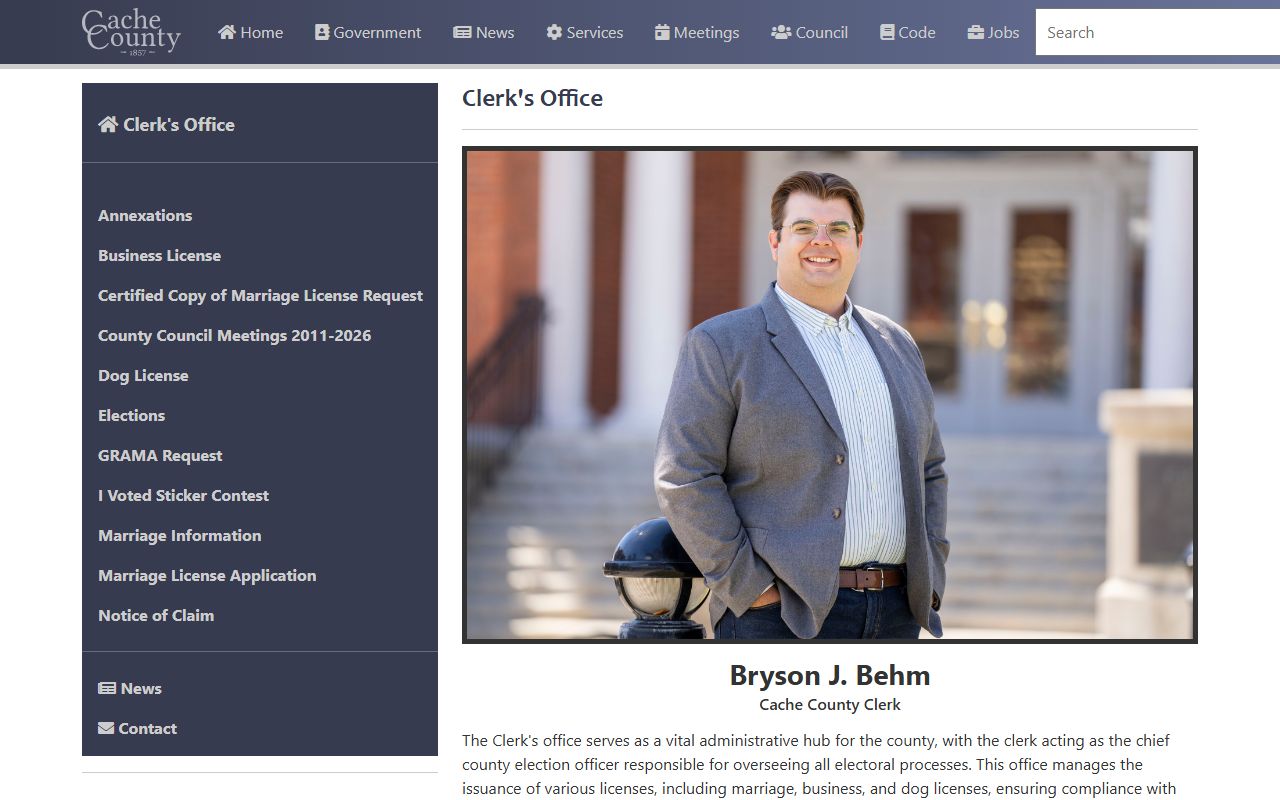
The Clerk's office is open Monday through Friday, 8:00 AM to 5:00 PM. The office accepts GRAMA requests for county-held records. Marriage records from Cache County are available from 1880 forward.
How to Search Cache County Divorce Decrees
Finding a divorce decree in Cache County is straightforward if you know where to look. Your options range from online case lookups to in-person visits at the Logan courthouse.
Start with the XChange public case search system for cases filed after 1997. XChange covers all Utah district court cases, including those from Cache County. The signup fee is $25, and the monthly subscription is $30 for up to 200 searches. You search by party name or case number. Results show filing date, case status, and the names of the parties. XChange does not let you download the full decree, but it confirms the case exists and gives you the case number for a copy request at the court.
To search in person, go to the First District Court clerk's office at 135 N 100 W in Logan. Bring the full name of at least one party and an approximate year. Staff will look up the case and retrieve the file. You can review documents at the counter and order certified copies on the spot. Bring a photo ID. Copy fees vary by page count, and certified copies cost more than plain ones. Call (435) 716-6600 to ask about wait times before your visit.
For historical records, the Utah State Archives is the best resource for older Cache County divorce cases. The Archives holds records from Cache County dating back to the county's founding in 1857. You can search the online catalog at archives.utah.gov before visiting in person. The Cache County Library at 255 N Main St, Logan also provides public computers and legal databases useful for records research.
Note: XChange covers cases from 1997 forward only. For earlier cases, you must contact the court clerk directly or check the Utah State Archives catalog.
The Cache County Divorce Filing Process
Every divorce case in Cache County creates a set of documents that become the permanent court record. The process starts with the petition and ends with the divorce decree. All steps in between are also part of the public file.
Residency is required first. Under Utah Code § 30-3-1, at least one spouse must have lived in Utah and in Cache County for at least three months before filing. The petitioner files the divorce petition at the First District Court clerk's office in Logan and pays the filing fee of approximately $330. Utah offers no-fault divorce on the grounds of irreconcilable differences. Fault-based grounds also exist, including adultery, willful desertion for more than one year, willful neglect, habitual drunkenness, conviction of a felony, and cruel treatment causing bodily harm or serious mental distress.
After filing, the other spouse must receive the divorce papers through proper legal service. The petitioner files proof of service with the court once service is done. The waiting period then begins. Under Utah Code § 30-3-18, no final hearing can take place until 30 days after filing when no minor children are part of the case. When minor children are involved, the wait is 90 days and both parents must complete a mandatory divorce orientation education course before the court will issue the decree. This requirement comes from Utah Code § 30-3-11.2, and Utah is the only state with this requirement built into its divorce law.
Property and debt division are handled under Utah Code § 30-3-5. Utah courts use equitable distribution, dividing marital property fairly rather than necessarily equally. The judge signs the decree once all issues are resolved. Under Utah Code § 30-3-7, the decree becomes absolute when the judge signs it and the clerk enters it. From that point, the divorce decree is a permanent part of Cache County's public court record.
What Cache County Divorce Decrees Contain
A Cache County divorce decree is the final court order that ends a marriage. You need a certified copy of this document for most legal tasks that follow a divorce. Banks, title companies, government offices, and courts in other states all typically require a certified copy, not a plain photocopy.
The decree from a Cache County case sets out the full legal names of both parties, the effective date of the divorce, property and debt division terms, any spousal support or maintenance awards, custody and visitation arrangements when children are involved, child support amounts, and health insurance obligations for minor children. Name restoration orders appear in the decree if one party requested a return to a prior legal name. All of these are court orders, and violating them can result in contempt proceedings in Cache County.
The full case file also contains the original divorce petition, the summons, proof of service, financial disclosure statements, any motions or responses filed during the case, and any settlement agreements or stipulations signed by the parties. Under Utah Code § 63G-2-201, most of this file is public. Some information may be redacted, particularly Social Security numbers and certain details involving minor children. The decree itself, however, remains open to public inspection under Utah Code § 30-3-4.
Public Access to Cache County Divorce Cases
Cache County divorce records are public under Utah's Government Records Access and Management Act. Any member of the public can request a copy of a divorce decree from the First District Court. You do not need to be a party to the case or show a reason for your request.
GRAMA classifies government records as public, private, controlled, or protected. Under Utah Code § 63G-2-302, some details in a divorce file are private. Courts redact those items before providing copies to the public. Common redactions include financial account numbers, Social Security numbers, and some information about minor children. The divorce decree itself stays open.
Records that are 75 years or older are fully public under Utah law. This means Cache County divorce cases from the 1940s and earlier are available without restriction. The Utah State Archives holds historical Cache County records from 1857 forward. Researchers can visit the Archives at 300 S. Rio Grande Street, Salt Lake City, or use the online catalog to locate records before visiting.
The Utah State Courts site also explains the GRAMA process for requesting court records and what to expect when you submit a formal public records request to the First District Court in Logan.
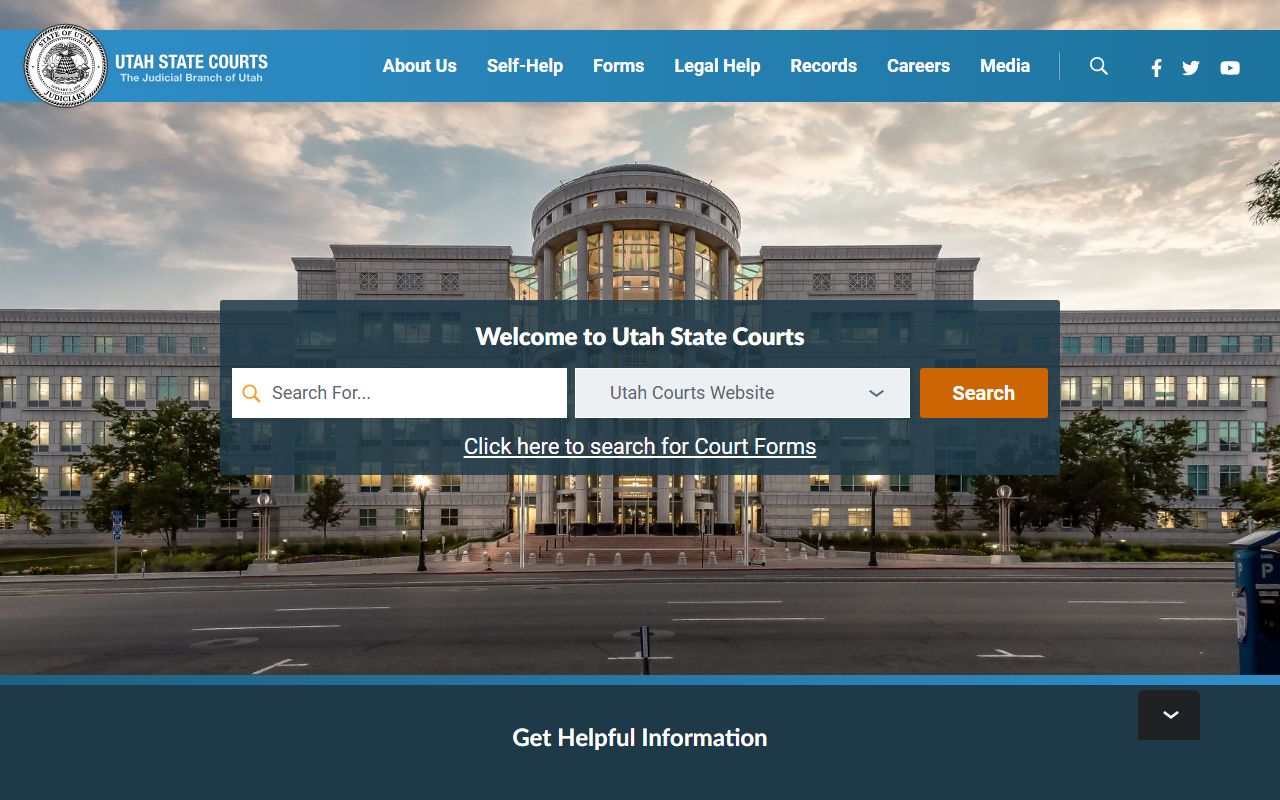
The Utah Courts website provides guidance on submitting records requests, including the forms and contact information needed to request Cache County divorce decree copies by mail.
Cache County Divorce Certificates
The Utah Office of Vital Records and Statistics holds divorce certificates for divorces that took place between 1978 and 2010. A divorce certificate is a shorter document. It confirms that a divorce occurred and identifies the parties and date. It does not include the detailed terms of the dissolution, so it is not a substitute for the full decree in most legal situations.
Certificates cost $18 for the first copy and $10 for each additional copy ordered at the same time. You can order through the SILVER online portal at vitalrecords.utah.gov, by mail to P.O. Box 141012, Salt Lake City, UT 84114-1012, or in person at 288 North 1460 West, Salt Lake City. The office is open Monday through Friday, 8:00 AM to 5:00 PM. Call (801) 538-6105 for recorded information. The CDC vital records guide also lists Utah as a source for this type of request.
For Cache County divorces before 1978 or after 2010, no certificate exists at the state level. Contact the First District Court in Logan directly for those years. Under Utah Code § 26-2-22, divorce certificates are restricted to the parties named in the record, their immediate family, legal representatives, and people with a direct and tangible interest. If you need the full decree with all orders, you must request it from the court, not the vital records office.
Note: The state vital records office can only issue a short-form certificate for divorce records. If your attorney or a financial institution needs the full decree, always request a certified copy from the First District Court in Logan.
Historical Cache County Divorce Records
Cache County was established in 1857 and has maintained court records since that time. No known courthouse disasters have occurred in Cache County, so historical records are well preserved. The Utah State Archives holds Cache County divorce records from the county's founding through recent decades. The Archives research room is open to the public at 300 S. Rio Grande Street, Salt Lake City, UT 84101, and staff can assist with locating specific record series.
The Utah State Archives collection on FamilySearch includes digitized images from many Utah counties covering 1848 through 2001. Cache County records are part of this collection. Historical divorce cases are often mixed with other civil court files and may require a chronological search rather than a name-based one for older years. Microfilm copies of many records are also available.
For genealogical research, FamilySearch is often the fastest first step for Cache County divorce records from before 1900. The FamilySearch wiki for Cache County provides detailed guidance on which record collections exist and how to access them. After identifying a case there, researchers can order copies from the Utah State Archives or the First District Court depending on the year of the divorce.
Legal Help for Cache County Residents
Several free and low-cost resources are available to Cache County residents who need help with a divorce case or a records request.
The Utah State Courts self-help center has court-approved forms for every stage of a divorce case, from the initial petition to the final decree. The Online Court Assistance Program (OCAP) generates properly formatted forms through a step-by-step interview. This is free to use and can save significant time at the court clerk's window in Logan. The Utah State Courts website provides information on filing procedures, court locations, and general legal guidance for Cache County divorce cases.
Parties to an active Cache County case can check status online using the MyCourtCase portal. This free service sends notifications when new documents are filed or hearings are scheduled, which means fewer trips to the courthouse at 135 N 100 W.
Utah Legal Services provides free civil legal help to low-income residents, including those in Cache County. The Utah State Bar lawyer referral service can connect you with a family law attorney if you need paid representation. The Cache County Library at 255 N Main St in Logan also provides public computers and access to legal databases useful for divorce research and form preparation.
Cities in Cache County
Cache County includes Logan and several surrounding communities in northern Utah. All divorce cases for Cache County residents are filed at the First District Court in Logan, regardless of which city or town the parties live in within the county.
Logan is the county seat of Cache County and the location of the First District Court. It is also home to Utah State University. All Cache County divorce decrees are on file at the courthouse at 135 N 100 W, Logan.
Nearby Counties
Cache County borders three other Utah counties. You must file your divorce case in the county where you have been a resident for at least three months. If you have recently moved, confirm which county applies to your situation before filing.