
San Juan County Divorce Decree and Court Records
A San Juan County divorce decree is the official court order dissolving a marriage under Utah law. The Seventh District Court in Monticello handles all dissolution of marriage cases filed in San Juan County. This is the largest county by area in Utah, covering a vast stretch of southeastern Utah that includes portions of the Navajo Nation. This page explains how to search for a divorce decree in San Juan County, how to request certified copies, and what to expect whether your case is recent or predates the court computer system.
San Juan County Quick Facts
San Juan County Seventh District Court
The Seventh Judicial District Court in Monticello is the primary court for divorce filings in San Juan County. The Seventh District serves Carbon, Emery, Grand, and San Juan counties. For San Juan County residents, the courthouse is at 297 South Main Street, Monticello, UT 84535, phone (435) 587-2122. The District Court Clerk keeps the official case file for each dissolution of marriage, including the signed divorce decree, motions, stipulations, and related orders.
Because San Juan County covers an enormous geographic area including portions of the Navajo Nation, courthouse hours may be limited compared to urban courts. In-person visits for record requests should be confirmed in advance. The court handles general jurisdiction matters including civil, criminal, family, and probate cases, with divorce treated as a family law matter under the court's standard docket.
The Utah State Courts website provides a summary of how the Seventh District Court operates in San Juan County, including information on the types of records maintained and the court's approach to family law cases in this culturally diverse region.
The court site notes that San Juan County has a large Native American population, particularly Navajo, and that the court takes culturally sensitive approaches to justice in the region.
| Court |
Seventh District Court 297 South Main Street Monticello, UT 84535 Phone: (435) 587-2122 |
|---|---|
| Hours | Monday through Friday (confirm by phone due to limited staffing) |
| Website | utcourts.gov |
Navajo Nation and Divorce Jurisdiction in San Juan County
San Juan County includes significant portions of the Navajo Nation reservation. This creates a dual court system that can affect how and where a divorce is handled. For residents of the Navajo Nation within San Juan County, some family law matters, including dissolution of marriage, may fall under tribal court jurisdiction depending on the citizenship and residence of the parties.
Navajo Nation courts exercise jurisdiction over family law cases involving enrolled tribal members who reside on the reservation. Tribal court divorce records are separate from San Juan County state court records and are not included in the Utah XChange system. If you are searching for a divorce decree involving Navajo Nation members, contact the Navajo Nation courts directly in addition to the Seventh District Court in Monticello.
For divorces filed in the Utah state court system, the Seventh District Court in Monticello handles the case regardless of the parties' tribal affiliation. The state court applies Utah divorce statutes. Under Utah Code § 30-3-1, at least one spouse must have been a resident of Utah and of San Juan County for three months before filing in the state court. The resulting divorce decree is a Utah state court record maintained at the Monticello courthouse.
Note: If you are unsure whether a dissolution of marriage was handled in state court or tribal court in San Juan County, it is worth checking both systems, especially for cases involving Navajo Nation land or citizenship.
Filing for Divorce in San Juan County
Filing for dissolution of marriage in San Juan County follows the same process as all Utah counties. You submit your petition to the Seventh District Court Clerk in Monticello and pay the filing fee of approximately $330. The clerk assigns a case number and the dissolution of marriage case officially begins. Under § 30-3-1, Utah recognizes both fault and no-fault grounds for divorce. Irreconcilable differences is the most common ground used in San Juan County cases. Other recognized grounds include adultery, willful desertion for more than one year, habitual drunkenness, conviction of a felony, and cruel treatment causing bodily harm or mental distress.
After the petition is filed, the mandatory waiting period applies. Under Utah Code § 30-3-18, the court cannot hold a final hearing until at least 30 days have passed for cases without minor children, and 90 days for cases with minor children. The court may issue interim orders during this period covering support, custody, or use of property. The court will only waive the waiting period in extraordinary circumstances.
When minor children are involved in a San Juan County dissolution case, both parents must complete a mandatory divorce orientation education course before the judge will sign the divorce decree. This requirement under Utah Code § 30-3-11.2 applies statewide. The course addresses the needs of children both during and after the divorce process. If the respondent files a formal answer, mediation may also be required before the court schedules a final hearing.
How to Search San Juan County Divorce Records
San Juan County divorce records are accessible through several methods. The Utah Courts system at utcourts.gov serves as the main gateway for online searches and court-approved resources.
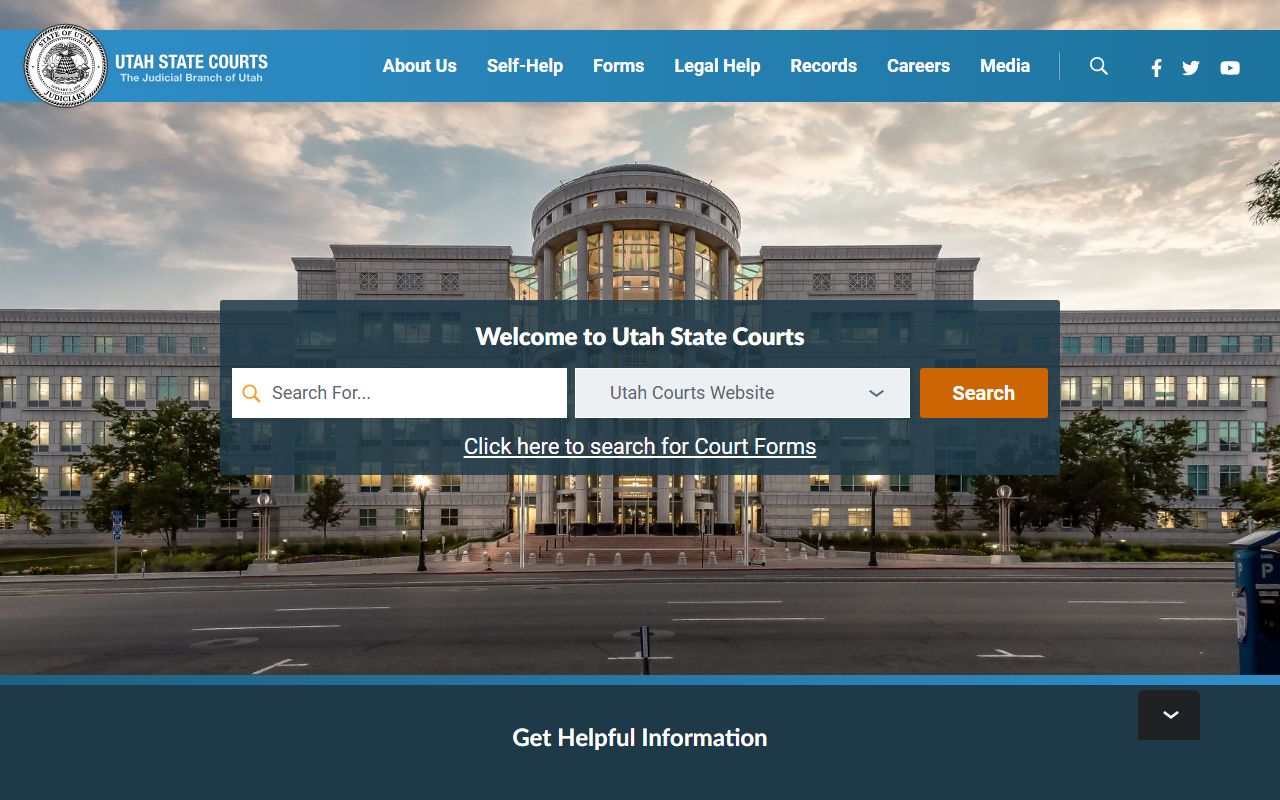
The Utah Courts website provides access to XChange case searches, self-help divorce forms through OCAP, and the MyCase portal for parties tracking their own cases statewide, including in San Juan County.
The Utah Courts XChange system at xchange.utcourts.gov allows public searches of San Juan County divorce cases filed since 1997. A monthly subscription of $30 covers up to 200 searches. Document images for cases filed since July 1, 2010 are available for $0.50 each. Free public terminals at the Monticello courthouse provide XChange access during business hours without a subscription. You search by party name or case number. Results show the filing date, parties involved, hearing dates, judgments, and case status.
For in-person record requests, bring the full names of both spouses, the approximate year of the divorce filing, and valid photo ID. Case numbers speed up the search. The clerk can pull the file, confirm case details, and make certified copies of the divorce decree. Processing time and fees depend on the number of pages. For historical San Juan County divorces predating the court computer system, the Utah State Archives in Salt Lake City maintains historical records. San Juan County is included in the Archives' statewide collection covering years 1848 through 2001.
The MyCase portal from Utah Courts gives parties free online access to their own active San Juan County divorce case. You register with your case number and receive notifications about filings, hearings, and changes to your case. This is a separate service from XChange and provides more detailed access to parties in the case.
Contents of a San Juan County Divorce Decree
The divorce decree is the document most commonly sought from San Juan County court records. Under Utah Code § 30-3-4, the decree is the final court order in a dissolution of marriage case. It may include orders on children, medical coverage for children, property division, and debts. The judge must review evidence, even if only by affidavit, before signing and entering the decree.
Property and debt division in San Juan County divorce cases follows the equitable distribution standard under Utah Code § 30-3-5. The court divides marital property and debts in a way that is fair given the circumstances of the case. The decree may also include alimony, child support, custody, and parent-time schedules. The First District Court retains ongoing jurisdiction to modify support and custody after the decree is entered if circumstances change.
San Juan County divorce decrees are public records under Utah Code § 63G-2-201. Any member of the public may request to view or copy the decree. Social Security numbers, financial account numbers, and identifying information about minor children are typically redacted in public copies. A complete case file may be sealed by court order, but under Utah Code § 30-3-4(2), the divorce decree itself remains open to public inspection even if the rest of the file is sealed.
Additional privacy protections under Utah Code § 63G-2-302 apply to records classified as private. These include records containing sensitive personal information where disclosure would constitute an unwarranted invasion of privacy. The court clerk in Monticello can advise on what portions of a San Juan County divorce record are available to the public upon request.
San Juan County Divorce Certificates
The Utah Office of Vital Records and Statistics maintains short-form divorce certificates for all Utah divorces from 1978 through 2010. A divorce certificate confirms that a dissolution of marriage took place and lists the parties' names, the date, and the county. It does not include property terms, custody arrangements, or other case details. For San Juan County divorces before 1978 or after 2010, you must contact the Seventh District Court in Monticello directly.
Divorce certificates can be ordered online at vitalrecords.utah.gov, by mail, or in person at the Vital Records office in Salt Lake City. The fee is $18 for the first certified copy and $10 for each additional copy ordered at the same time. The mailing address is: Office of Vital Records and Statistics, 288 North 1460 West, P.O. Box 141012, Salt Lake City, UT 84114-1012. Phone: (801) 538-6105. Mail orders take approximately three weeks to process.
Historical San Juan County divorce records predating 1978 are held by the Utah State Archives, which maintains divorce records going back to the territorial period for counties including San Juan. The Archives' digitized collection covers 1848 through 2001. Many records are available on microfilm at the research room at 300 South Rio Grande Street, Salt Lake City.
Nearby Counties
San Juan County borders several other Utah counties in the southeast corner of the state. Divorce cases must be filed in the county where the petitioner has met the three-month residency requirement under Utah law. Each neighboring county maintains its own divorce records at its district court clerk's office.