
Washington County Divorce Decree Records
A Washington County Divorce Decree is the final court order that dissolves a marriage in this fast-growing region of southwestern Utah. The Fifth District Court in St. George handles all dissolution cases for Washington County residents. The District Court Clerk maintains every divorce record and can issue certified copies on request. This guide explains how to search for a Washington County Divorce Decree, request copies, and understand the process from filing through finalization.
Washington County Quick Facts
Washington County Fifth District Court
The Fifth District Court in St. George is the official court for all Washington County divorce cases. The District Court Clerk at this courthouse keeps all divorce records and can provide certified copies of decrees. Washington County is one of Utah's fastest-growing counties, named after George Washington and created in 1852. The county includes St. George, which was founded as a cotton mission in 1861 and has grown into a major retirement and retirement destination near Zion National Park.
The Fifth District Court is at 206 West Tabernacle Street, St. George, UT 84770, phone (435) 986-5700. Staff can search cases by party name or case number. The court is open Monday through Friday during standard business hours. Bring your photo ID and the names of both spouses when you visit to search records in person.
The Washington County Clerk/Auditor is at 111 East Tabernacle Street, St. George, UT 84770, phone (435) 477-8340. This office handles county-level administrative records. Divorce decrees, however, are held by the District Court Clerk, not the County Clerk.
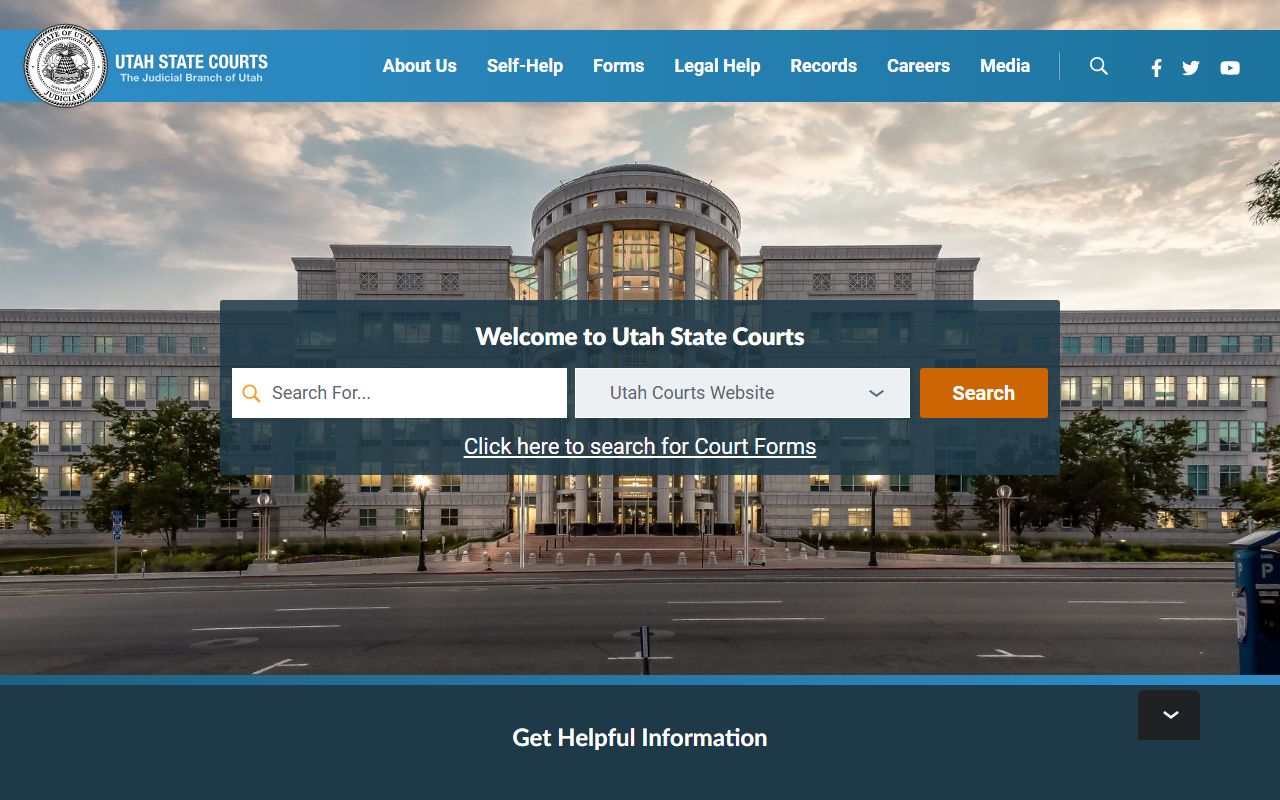
The Utah State Courts website at utcourts.gov provides direct links to the Fifth District Court, court forms, and online record search tools for Washington County cases.
| Court |
Fifth District Court 206 West Tabernacle Street St. George, UT 84770 Phone: (435) 986-5700 |
|---|---|
| Hours | Monday through Friday, standard business hours |
| Website | utcourts.gov |
How to Search Washington County Divorce Decree Records
You have several ways to search for a Washington County Divorce Decree. The Utah Courts XChange system at xchange.utcourts.gov lets you search by party name or case number for cases filed after 1997. A monthly subscription runs $30 for up to 200 searches. Each document view costs $0.50. XChange shows basic case details online, but full copies of documents require a courthouse visit or a written request.
If you were a party to the case, use mycase.utcourts.gov for free access to your own divorce case. This portal provides document viewing and automated updates. It gives parties more detail than the public XChange search and costs nothing to use.
For public online access, the XChange case search provides a streamlined search interface for public court records. You can view decrees and orders that are classified as public documents with a subscription, and free public terminals are available at the St. George courthouse.
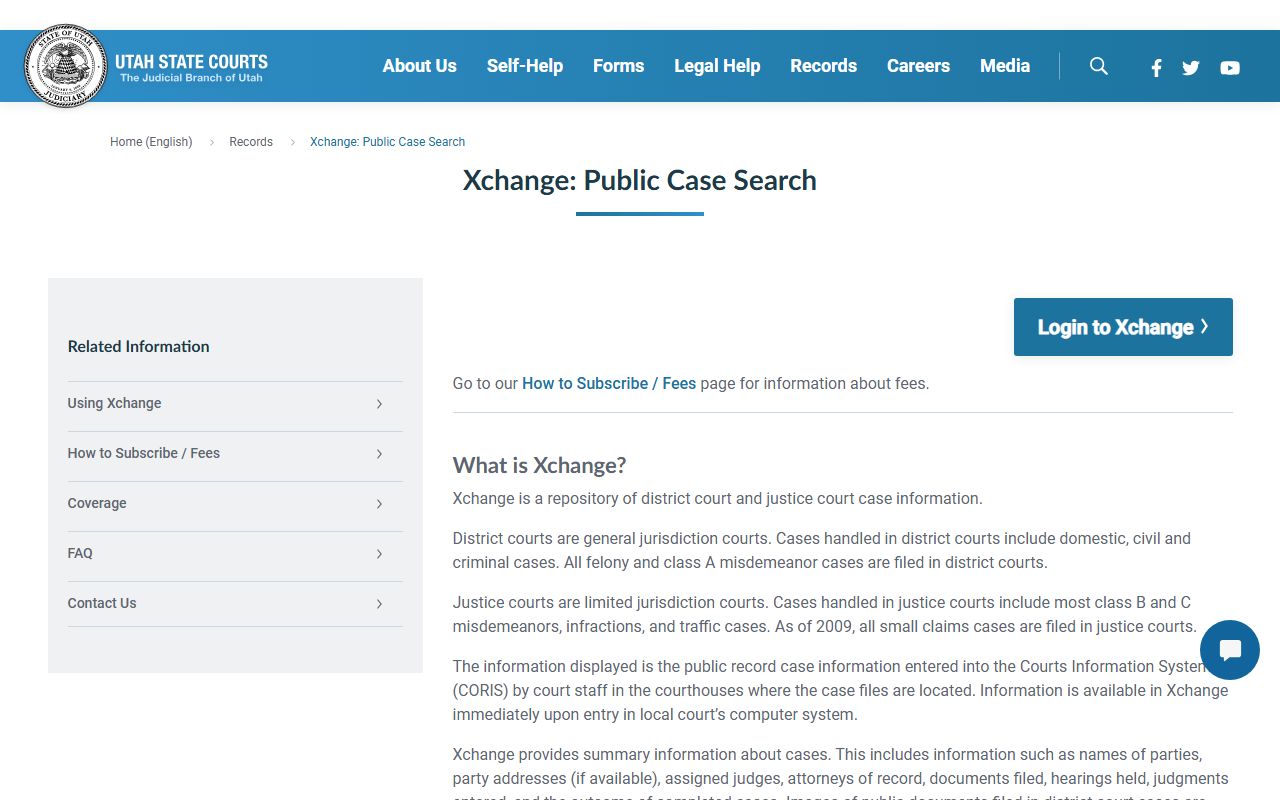
The XChange case search is the official tool for searching Washington County divorce cases by name or case number.
To search in person, visit the Fifth District Court at 206 West Tabernacle Street in St. George. Show your ID and provide the names of both spouses and the approximate year of divorce. Staff can search records and provide copies. Certified copies cost a minimum of $5 per document. GRAMA copy fees are $0.25 per page for standard pages.
Note: Washington County divorce records go back to 1878. For historical records from the nineteenth century and early twentieth century, contact the Utah State Archives at 300 S. Rio Grande Street, Salt Lake City, UT 84101, phone (801) 531-3800.
Filing for a Divorce Decree in Washington County
Filing a divorce in Washington County starts at the Fifth District Court Clerk's office in St. George. You pay the filing fee of approximately $330 when you submit your Petition for Divorce. The clerk assigns a case number and the record begins. Under Utah Code § 30-3-1, at least one spouse must have lived in Utah and in Washington County for at least three months before filing.
After filing, you serve the respondent with the divorce petition and summons. You can use the county sheriff, a private process server, or certified mail. Proof of service is filed with the court clerk. Utah offers no-fault divorce based on irreconcilable differences. Fault grounds under § 30-3-1 include adultery, willful desertion for more than one year, habitual drunkenness, felony conviction, and cruel treatment causing bodily injury or great mental distress.
Washington County cases with minor children require both parents to complete the mandatory divorce orientation course under Utah Code § 30-3-11.2. This course must be completed before the court can enter the final decree. Utah also requires a waiting period under Utah Code § 30-3-18. Cases without children wait 30 days from filing. Cases with children wait 90 days.
The judge signs the final Divorce Decree after reviewing all evidence. Under Utah Code § 30-3-7, the decree becomes absolute when entered by the clerk. Property division is governed by Utah Code § 30-3-5, which requires equitable orders on property, debts, child support, and spousal support.
What Washington County Divorce Records Contain
A full Washington County divorce case file contains many documents. The Petition for Divorce is first. Financial disclosures and asset declarations follow. If children are involved, a Parenting Plan addresses custody and support. A Property Settlement Agreement covers how assets and debts are split. Temporary Orders may be issued during the case. Findings of fact and the Final Decree of Divorce close the file.
The Divorce Decree is what most people need. It is the signed court order ending the marriage. Certified copies are required for name changes, property title transfers, remarriage applications, and many financial transactions. You can request a certified copy in person at the Fifth District Court in St. George. The fee is a minimum of $5 per certified document.
Washington County divorce records are public under Utah Code § 63G-2-201. Any person can request to view them. Some details are protected, including Social Security numbers, financial account numbers, and information about minor children, per Utah Code § 63G-2-302. The decree itself stays open to the public.
Divorce Certificates for Washington County
The Utah Office of Vital Records holds divorce certificates for Washington County cases from 1978 through 2010. A certificate confirms that a divorce occurred but does not include the full terms of the settlement. Order online at vitalrecords.utah.gov, by mail, or in person at 288 North 1460 West, Salt Lake City, UT 84114-1012, phone (801) 538-6105. The first copy costs $18 and each additional copy ordered the same day costs $10. Allow about three weeks for mail processing. Expedited service is available for an additional $15 fee.
You can also request divorce certificates for Washington County cases in person at the Southwest Utah Public Health Department, located at 620 South 400 East, St. George, UT 84770, phone (435) 986-2557. Hours vary by day: Monday, Wednesday, and Thursday 7:30 AM to 5:30 PM; Tuesday 1:00 PM to 5:30 PM; Friday 8:00 AM to 5:00 PM. Bring a valid photo ID. This local option is convenient for Washington County residents who do not want to travel to Salt Lake City.
For divorces before 1978 or after 2010, go to the Fifth District Court Clerk in St. George. The court clerk holds all decrees regardless of the date. For very old records going back to 1878, the Utah State Archives may also have historical copies.
Cities in Washington County
Washington County includes several cities and towns. All divorce cases for Washington County residents are filed at the Fifth District Court in St. George.
St. George is the county seat and largest city in Washington County. It is home to the Fifth District Courthouse on West Tabernacle Street where all Washington County divorce cases are filed.
Nearby Counties
Washington County borders other Utah counties in the southwest corner of the state. If you are not sure which county applies to your case, check the address where you lived when you filed.